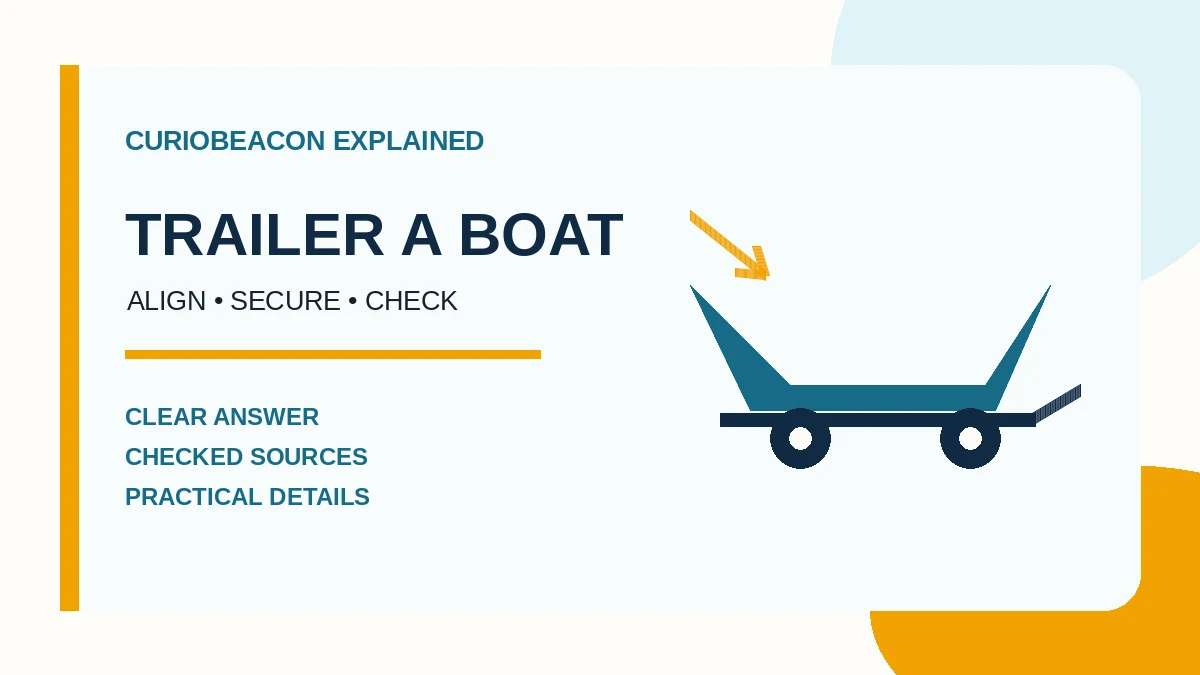
To trailer a boat, first confirm that the fully loaded boat and trailer fit every rating for the tow vehicle, hitch, and trailer. Couple the hitch, cross the safety chains, connect the breakaway device and lights, secure the bow and stern, and inspect the tires and brakes. At the ramp, prepare off-lane, back slowly, and keep every person out of pinch and crush zones.
1. Match the vehicle, hitch, trailer, and load
Start with the owner manuals and certification labels for the tow vehicle, hitch, boat, and trailer. The relevant number is the rig’s real loaded weight: trailer, boat, engine, fuel, batteries, water, safety equipment, and trip gear. Confirm towing capacity, gross combined weight rating, trailer gross vehicle weight rating, axle ratings, hitch and ball ratings, and permitted tongue weight. The lowest applicable rating is the limit; a larger hitch does not increase the vehicle’s rating.
If the numbers are uncertain, use a certified public scale and have a qualified dealer check the setup. Also verify licensing, brakes, breakaway equipment, lights, mirrors, width, and speed rules for every jurisdiction on the route. The BoatUS Foundation trailering guide stresses that the boat, trailer, and gear must remain within the trailer’s capacity.
2. Couple the trailer in a fixed sequence
- Align on level ground. Chock the trailer wheels before coupling. Keep helpers visible and agree on one spotter and simple hand signals.
- Seat and lock the coupler. Lower it fully onto the correct-size ball, close the latch, insert its pin or lock, and raise the tongue jack. Confirm engagement according to the coupler manual.
- Cross the safety chains. Attach them to the vehicle’s designated points, not the ball or removable drawbar. Leave turning clearance without letting them drag.
- Connect the breakaway cable separately. Route it as its manufacturer specifies so it cannot tangle with the chains or pull during a normal turn.
- Plug in the wiring. Test tail, brake, turn, and marker lights with a helper. Test trailer brakes using the controller procedure in the manuals.
- Walk around once. Retract the jack completely, remove chocks, and confirm that nothing hangs below the frame.
3. Secure the boat and inspect the running gear
Seat the hull correctly on its bunks or rollers. Attach the winch strap and the separate bow safety connection, then add rated transom or gunwale tie-downs as the boat and trailer makers direct. A winch line is a loading device, not the only highway tie-down. Lower or support the outboard or sterndrive in its approved travel position and secure loose covers, anchors, electronics, doors, and gear.
Check cold tire pressure against the trailer tire or manufacturer specification, not the tow vehicle’s number. Inspect tread, sidewalls, valve stems, lug nuts, bearings, suspension, brakes, and the spare. Confirm the drain plug arrangement required for transport and local aquatic-invasive-species rules. The Discover Boating checklist covers these connection and running-gear checks.
4. Practice before entering traffic
Use an empty lot where practice is permitted. Learn the rig’s wider turns, longer stopping distance, and reverse response at walking speed. Adjust mirrors so both trailer sides remain visible. On the road, accelerate and brake gradually, increase following distance, allow extra clearance, and obey the lower of posted or equipment-specific limits. Stop soon after departure and periodically thereafter in a safe location to check heat, shifting cargo, straps, tires, and connections.
If sway begins, stay calm, ease off the accelerator, keep steering smooth, and follow the tow-vehicle and brake-controller manuals. Do not make an improvised correction that conflicts with them. For related road preparation, see CurioBeacon’s guide to tire rotation and inspection.
5. Stage before occupying the ramp
- Inspect the ramp, water level, wind, current, dock, lane rules, and submerged edge before backing.
- In the staging area, load gear, install required drain plugs, attach bow and stern dock lines, fit fenders, and remove the travel cover.
- Remove transom tie-downs only when the boat and trailer instructions say to, but keep the bow winch and safety connection attached until the boat is at the water and ready for a controlled launch.
- Raise the drive enough to avoid the ramp. Disconnect lights only if the trailer maker requires it; many modern systems are designed for immersion.
The Oregon State Marine Board recommends completing these preparations away from the ramp so the launch lane stays clear. For a smaller craft moved over land without a trailer, use the separate canoe portaging guide.
6. Back, launch, and retrieve without entering a crush zone
Back straight and slowly with the spotter always visible. Stop immediately if the spotter disappears. Put the vehicle in Park, set the parking brake, and use wheel chocks when the manuals or ramp conditions call for them. Nobody should stand behind a moving rig, between the tow vehicle and trailer, between the boat and trailer, or in line with a tensioned winch strap. Never try to stop a rolling boat or trailer with your body.
When the boat is adequately afloat, release the bow restraints from a safe position and control it with dock lines. Move it clear while the driver parks. For retrieval, reverse the sequence: align the boat, winch it according to the trailer manual while everyone remains clear, attach the bow safety connection, and pull to the staging area before installing road tie-downs and completing another walk-around. The U.S. Coast Guard Auxiliary trailering guide specifically warns people away from the space between the boat and trailer.
Stop when the setup is not right
Do not tow with an unknown weight, mismatched ball, damaged coupler, frayed strap, cracked tire, hot bearing, nonworking required light or brake, missing safety connection, or unstable load. Do not launch on a ramp that exceeds the vehicle’s manual limitations or current traction conditions. A marine-trailer shop can correct fit, brake, bearing, and support problems. After saltwater use, clean and maintain the trailer as its maker directs; CurioBeacon’s rust-prevention principles explain why rinsing, drying, and inspection matter.